
20-Minute Full Body Workout for Beginners at Home (No Equipment Needed)
Are you looking for a simple, effective way to get fit without spending hours at the gym? A 20-minute full body workout for beginners is an excellent place to start. Whether you’re completely new to exercise, returning after a long break, or trying to establish a healthy routine, this beginner-friendly workout can help you build strength, improve endurance, and feel more energetic.
The best part? You don’t need expensive gym equipment, a personal trainer, or a complicated fitness plan. All you need is 20 minutes, a little space, and the motivation to get moving.
This workout targets your major muscle groups, including your legs, arms, shoulders, chest, core, and glutes. It combines gentle cardio with basic strength exercises, making it suitable for many beginners.
In this guide, you’ll discover how to complete a 20-minute workout at home, perform each exercise correctly, avoid common mistakes, and create a sustainable fitness routine.
Let’s get started!
Why Choose a 20-Minute Full Body Workout?
Many beginners believe they need to exercise for an hour or more to see results. However, shorter workouts can also provide meaningful health benefits when performed consistently.
A 20-minute full body workout is especially useful because it allows you to exercise without overwhelming your schedule or your body.
1. Saves Time
One of the biggest challenges beginners face is finding time to exercise.
A 20-minute workout fits easily into a busy lifestyle. You can complete it before work, during your lunch break, or in the evening.
2. Builds Total-Body Strength
Full body workouts train several muscle groups in one session.
Exercises such as squats, wall push-ups, and glute bridges strengthen different parts of your body while improving everyday movements.
3. Improves Cardiovascular Fitness
Including movements such as marching, step jacks, and standing knee raises can increase your heart rate and improve cardiovascular endurance over time.
4. Supports Weight Management
Regular physical activity helps increase energy expenditure and supports long-term weight management when combined with balanced nutrition and healthy lifestyle habits.
5. Helps Build Exercise Consistency
Starting with manageable workouts makes it easier to develop a regular exercise habit.
Rather than attempting an intense routine immediately, beginners can gradually improve their fitness through consistent, comfortable movement.
What You Need Before Starting
One major advantage of this 20-minute beginner workout at home is that it requires no specialized equipment.
You only need:
- Comfortable workout clothes.
- Supportive athletic shoes.
- A small, clear exercise space.
- A sturdy chair or wall for support.
- An optional exercise mat.
- Water for hydration.
- A timer or smartphone.
Choose a flat, non-slip surface and remove obstacles that could cause you to trip.
If you have a medical condition, are recovering from an injury, or have been advised to limit physical activity, consult an appropriate healthcare professional before beginning.
Your Complete 20-Minute Full Body Workout for Beginners
This workout consists of three simple sections:
| Workout Section | Duration |
|---|---|
| Warm-up | 3 minutes |
| Full body exercise circuit | 14 minutes |
| Cool-down and stretching | 3 minutes |
| Total | 20 minutes |
The main workout includes seven beginner-friendly exercises.
Perform each exercise for 40 seconds, followed by 20 seconds of rest. Complete the seven exercises twice.
Each round takes seven minutes, giving you a total of 14 minutes of exercise and recovery intervals.
Move at your own pace. You do not need to complete as many repetitions as possible.
Part 1: 3-Minute Warm-Up
Warming up prepares your muscles and joints for exercise. It also gradually increases your heart rate and helps you transition into the workout.
1. Marching in Place — 60 Seconds
Stand tall with your feet hip-width apart.
Begin marching gently, lifting one knee at a time while swinging your arms naturally.
Keep your shoulders relaxed and maintain steady breathing.
Benefits: Activates your leg muscles, increases circulation, and gradually raises your heart rate.
2. Arm Circles — 30 Seconds
Stand with your feet shoulder-width apart and extend your arms comfortably to the sides.
Make small forward circles for 15 seconds, then reverse direction for another 15 seconds.
Avoid forcing your shoulders into uncomfortable positions.
Benefits: Warms up the shoulders and improves upper-body mobility.
3. Side Steps — 30 Seconds
Step to the right, bring your left foot toward it, and repeat in the opposite direction.
Keep your knees slightly bent and maintain a relaxed posture.
Benefits: Activates your hips and legs while preparing your body for lateral movement.
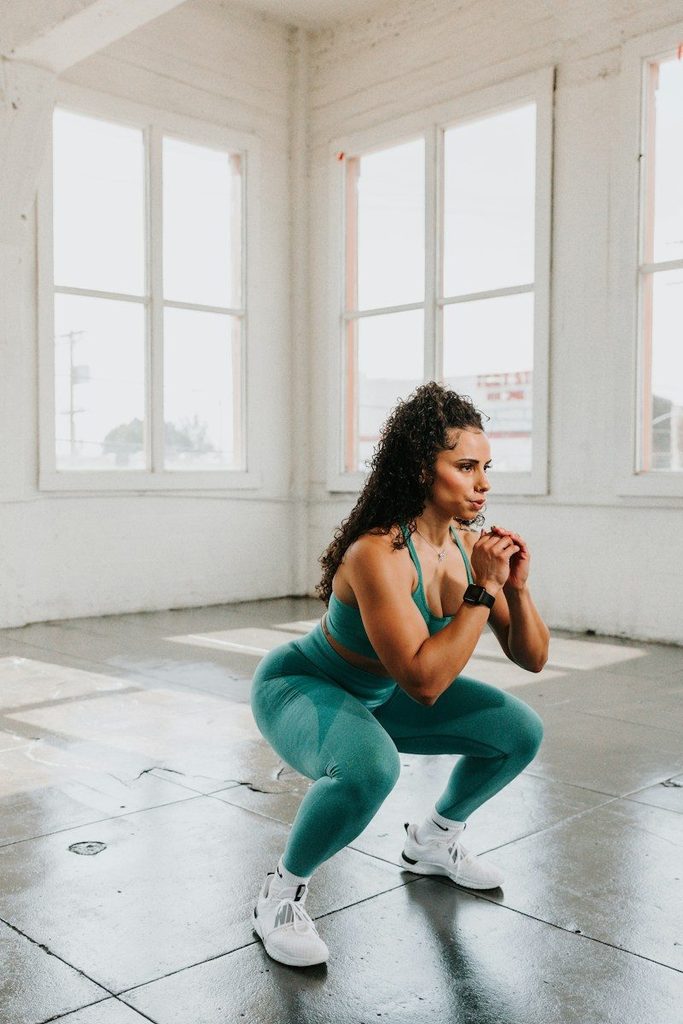
4. Gentle Bodyweight Squats — 60 Seconds
Stand with your feet approximately shoulder-width apart.
Push your hips backward and bend your knees slightly, as though sitting in a chair.
Return to standing and repeat slowly.
Only lower as far as feels comfortable.
Benefits: Prepares your quadriceps, hamstrings, glutes, and hips for the workout.
Part 2: 14-Minute Full Body Workout
Now it’s time for the main workout.
You’ll complete seven exercises that target your upper body, lower body, and core.
Workout format:
- Exercise for 40 seconds.
- Rest for 20 seconds.
- Complete all seven exercises.
- Repeat the entire circuit once.
Exercise 1: Bodyweight Squats
Duration: 40 seconds
Bodyweight squats are one of the most effective foundational exercises for beginners.
They strengthen your lower body and help improve functional movements such as sitting down and standing up.
How to perform bodyweight squats:
- Stand with your feet shoulder-width apart.
- Keep your chest lifted and your back in a comfortable neutral position.
- Push your hips backward.
- Bend your knees and lower your body slowly.
- Press through your feet to return to standing.
- Repeat with controlled movements.
Muscles worked: Quadriceps, glutes, hamstrings, and core.
Beginner modification: Place a sturdy chair behind you and gently sit down before standing again.
Common mistake: Allowing your knees to collapse inward or rushing through repetitions.
Exercise 2: Wall Push-Ups
Duration: 40 seconds
Wall push-ups are a beginner-friendly alternative to traditional floor push-ups.
They strengthen your upper body without requiring you to support your full body weight on the floor.
How to perform wall push-ups:
- Stand facing a sturdy wall.
- Place your palms against the wall at approximately shoulder height.
- Walk your feet backward until your body forms a slight angle.
- Bend your elbows and bring your chest toward the wall.
- Push through your palms to return to the starting position.
- Repeat slowly.
Muscles worked: Chest, shoulders, triceps, and core.
Beginner modification: Stand closer to the wall to reduce difficulty.
Common mistake: Letting your hips sag or flaring your elbows excessively.
Exercise 3: Standing Knee Raises
Duration: 40 seconds
Standing knee raises combine gentle cardiovascular activity with core engagement.
They are useful for beginners who want a low-impact alternative to jumping exercises.
How to perform standing knee raises:
- Stand tall with your feet hip-width apart.
- Engage your abdominal muscles gently.
- Lift your right knee toward your waist.
- Lower your foot with control.
- Repeat with your left knee.
- Continue alternating sides.
Muscles worked: Hip flexors, abdominal muscles, and legs.
Beginner modification: Hold a sturdy chair for balance and lift your knees only a comfortable distance.
Common mistake: Leaning excessively backward or moving too quickly.
Exercise 4: Glute Bridges
Duration: 40 seconds
Glute bridges strengthen the muscles around your hips and improve lower-body stability.
They are especially helpful for beginners who spend much of the day sitting.
How to perform glute bridges:
- Lie on your back with your knees bent.
- Place your feet flat on the floor, approximately hip-width apart.
- Keep your arms beside your body.
- Tighten your glutes and gently lift your hips.
- Pause briefly near the top.
- Lower your hips slowly and repeat.
Muscles worked: Glutes, hamstrings, and core.
Beginner modification: Lift your hips only a few inches off the floor.
Common mistake: Arching your lower back excessively instead of using your glutes.
Exercise 5: Bird Dog
Duration: 40 seconds
The bird dog is a controlled core exercise that improves balance, coordination, and spinal stability.
It is a useful alternative to more demanding abdominal exercises.
How to perform bird dog:
- Begin on your hands and knees.
- Position your hands under your shoulders and knees under your hips.
- Extend your right arm forward and left leg backward.
- Keep your hips level and your torso stable.
- Return to the starting position.
- Repeat on the opposite side.
Muscles worked: Core, back stabilizers, shoulders, and glutes.
Beginner modification: Extend only one arm or one leg at a time.
Common mistake: Rotating your hips or lifting your leg too high.
Exercise 6: Step Jacks
Duration: 40 seconds
Step jacks are a low-impact variation of jumping jacks.
They increase your heart rate without requiring both feet to leave the ground.
How to perform step jacks:
- Stand with your feet together or hip-width apart.
- Step your right foot out to the side.
- Raise your arms overhead or to a comfortable height.
- Bring your right foot back toward the center.
- Repeat with your left foot.
- Continue alternating sides.
Muscles worked: Legs, shoulders, and core.
Beginner modification: Keep your arms below shoulder height and reduce the width of each step.
Common mistake: Moving faster than you can comfortably control.
Exercise 7: Standing Calf Raises
Duration: 40 seconds
Calf raises are a simple lower-body exercise that strengthens your calves and helps develop ankle control.
How to perform standing calf raises:
- Stand upright with your feet hip-width apart.
- Place one hand on a sturdy chair or wall if needed.
- Slowly lift your heels off the floor.
- Pause briefly while balancing on the balls of your feet.
- Lower your heels with control.
- Repeat at a comfortable pace.
Muscles worked: Calves and ankle stabilizers.
Beginner modification: Keep both hands on a stable support.
Common mistake: Bouncing quickly instead of using slow, controlled movement.
Repeat the Circuit
After completing all seven exercises, you’ve finished your first seven-minute round.
Repeat the same seven exercises for another seven minutes.
During the second round, focus on maintaining proper form rather than increasing speed.
If you become unusually breathless, dizzy, or uncomfortable, stop and recover rather than forcing yourself to finish.
Part 3: 3-Minute Cool-Down
Cooling down helps your breathing and heart rate gradually return toward their resting levels.
It also provides an opportunity to stretch the muscles used during your workout.
1. Slow Walking — 60 Seconds
Walk gently around your exercise space or march slowly in place.
Relax your shoulders and breathe steadily.
2. Standing Quadriceps Stretch — 30 Seconds
Hold a sturdy chair or wall for balance.
Bend one knee and gently bring your heel toward your glutes, holding your ankle only if comfortable.
Stretch for 15 seconds on each side.
3. Standing Calf Stretch — 30 Seconds
Place your hands against a wall.
Step one foot backward and keep its heel on the floor.
Lean forward gently until you feel a comfortable stretch in your calf.
Hold for 15 seconds on each side.
4. Chest and Shoulder Stretch — 30 Seconds
Stand upright and gently bring your hands behind your back if comfortable.
Open your chest without forcing your shoulders backward.
Hold the stretch while breathing normally.
5. Deep Breathing — 30 Seconds
Stand or sit comfortably.
Breathe in slowly and exhale naturally.
Allow your body to relax as you finish your workout.
Congratulations! You’ve completed your 20-minute full body workout.
Benefits of a 20-Minute Full Body Workout for Beginners
Although 20 minutes may seem short, regular sessions can contribute to meaningful improvements in your overall fitness.
Builds Muscle Strength
Bodyweight exercises challenge your muscles through controlled movement.
As your strength improves, everyday activities such as climbing stairs, carrying groceries, and standing from a chair may become easier.
Improves Stamina
Gentle cardio movements help train your cardiovascular system.
Over time, you may notice that walking, household activities, and other physical tasks feel less tiring.
Supports Healthy Weight Management
Exercise can support a healthy body weight by increasing physical activity and helping preserve muscle.
However, weight changes depend on multiple factors, including nutrition, total activity, sleep, and individual circumstances.
Improves Balance and Coordination
Exercises such as bird dogs, knee raises, and calf raises help train your body’s ability to maintain control during movement.
Supports Mental Well-Being
Regular physical activity can help improve mood, reduce stress, and support better sleep.
Even a short workout can provide a welcome break from a sedentary routine.
How Many Times a Week Should Beginners Do This Workout?
If you’re new to exercise, start with two or three full body workouts per week, ideally with recovery time between sessions.
For example:
| Day | Activity |
|---|---|
| Monday | 20-minute full body workout |
| Tuesday | Easy walking or gentle stretching |
| Wednesday | 20-minute full body workout |
| Thursday | Rest or light activity |
| Friday | 20-minute full body workout |
| Saturday | Comfortable walking or recreational activity |
| Sunday | Rest and recovery |
This schedule provides a manageable starting point without requiring intense exercise every day.
As your fitness improves, gradually increase your weekly activity.
For general adult health, the CDC recommends at least 150 minutes of moderate-intensity aerobic activity each week, along with muscle-strengthening activities on two or more days.
Your 20-minute workout can contribute toward these goals, although some of its time is spent warming up, cooling down, and resting.
How to Make Your 20-Minute Workout More Effective
Focus on Proper Exercise Form
Correct technique is more important than completing extra repetitions.
Perform each movement slowly and deliberately, especially while learning.
Stay Consistent
Consistency is one of the most important factors in long-term fitness progress.
Completing manageable workouts regularly is generally more sustainable than attempting extremely difficult sessions occasionally.
Increase Difficulty Gradually
Once the workout becomes easier, you can progress by increasing repetitions, using a greater range of motion, or choosing slightly more challenging exercise variations.
Change only one or two elements at a time.
Combine Exercise With Balanced Nutrition
Support your workout routine with nutritious meals containing protein, vegetables, fruit, whole grains, and healthy fats.
Drink enough water throughout the day, especially in hot conditions.
Prioritize Recovery
Your body needs time to adapt to physical activity.
Aim for adequate sleep, maintain reasonable workout intensity, and allow sore muscles time to recover.
Common Beginner Workout Mistakes to Avoid
1. Skipping the Warm-Up
Beginning intense movement without gradually preparing your body can make exercise feel more difficult.
Always start with gentle movements.
2. Exercising Too Hard Too Soon
Beginners sometimes attempt challenging workouts before developing basic strength and endurance.
Start with a manageable intensity and progress gradually.
3. Ignoring Pain
Mild muscle fatigue is common during exercise, but sharp pain is not something to push through.
Stop any exercise that causes pain and seek medical advice when appropriate.
4. Holding Your Breath
Remember to breathe throughout each movement.
Avoid unnecessarily holding your breath, particularly during strength exercises.
5. Expecting Immediate Results
Fitness improvements take time.
Rather than focusing only on visible changes, pay attention to improvements in strength, stamina, confidence, and movement quality.
Beginner Workout Progression: Your First Four Weeks
A gradual approach can help you develop confidence and improve your fitness without unnecessary pressure.
| Week | Workout Goal |
|---|---|
| Week 1 | Learn the movements and use easier modifications |
| Week 2 | Complete the routine with comfortable, controlled repetitions |
| Week 3 | Improve technique and reduce unnecessary pauses |
| Week 4 | Try slightly more challenging variations if ready |
There is no need to progress every week.
If an exercise still feels difficult, continue practicing the easier variation until you feel confident.
Can You Lose Weight With a 20-Minute Full Body Workout?
A 20-minute workout can contribute to a weight-management plan, especially when performed consistently.
The number of calories burned varies according to body size, exercise intensity, fitness level, and the movements performed.
However, exercise alone does not guarantee weight loss.
Long-term weight management generally involves a combination of regular physical activity, balanced eating habits, sufficient sleep, and sustainable lifestyle changes.
Instead of focusing entirely on calories, use your workouts to build strength, improve endurance, and support overall health.
Frequently Asked Questions About 20-Minute Full Body Workouts
Is a 20-minute full body workout enough for beginners?
Yes. Twenty minutes can be a useful starting point for beginners, particularly those who are currently inactive.
Regular sessions can help improve strength, movement confidence, and cardiovascular fitness. Additional activity may be needed to meet weekly physical activity recommendations.
Can I do this workout every day?
You can stay physically active daily, but beginners generally benefit from allowing recovery time between strength-training sessions.
Consider alternating full body workouts with walking, stretching, or other gentle activities.
Do I need equipment for this workout?
No. This routine uses your body weight and requires no specialized fitness equipment.
A sturdy chair, wall, or exercise mat may make certain movements more comfortable.
Is this workout suitable for overweight beginners?
Many of the exercises can be adapted for people with different body sizes and fitness levels.
Wall push-ups, chair squats, and step jacks offer accessible starting options. Choose movements that feel comfortable and appropriate for your abilities.
Should I exercise in the morning or evening?
The best workout time is the time you can maintain consistently.
Morning exercise may fit some schedules, while evening workouts may be more convenient for others.
How long does it take to see results?
Some beginners notice improvements in exercise confidence and stamina within several weeks.
Changes in muscle strength, endurance, and body composition vary depending on consistency, nutrition, recovery, and individual factors.
Can beginners do full body workouts without jumping?
Absolutely.
This workout uses low-impact movements such as marching, wall push-ups, squats, and step jacks.
You can complete the entire routine without jumping.
What if I cannot finish all 20 minutes?
Start with what you can comfortably manage.
You might begin with one seven-minute circuit, along with a short warm-up and cool-down, and gradually work toward the full routine.
A shorter session is still worthwhile.
Final Thoughts: Start Your Fitness Journey With Just 20 Minutes
Starting a fitness routine doesn’t have to be complicated, expensive, or intimidating.
This 20-minute full body workout for beginners provides a practical way to build strength, improve cardiovascular fitness, and establish healthy exercise habits from the comfort of your home.
With seven simple exercises, no specialized equipment, and beginner-friendly modifications, the routine is designed to help you get moving at your own pace.
Remember that fitness progress comes from consistent effort rather than perfection.
Start slowly, pay attention to your body, and gradually challenge yourself as your confidence and strength improve.
Your next step: Choose three days this week, set aside 20 minutes, and try the workout. Focus on completing each movement safely and comfortably.
Every workout is an opportunity to build a healthier, stronger, and more active lifestyle.